Walk into a home with custom built-ins and you feel it right away. The bookshelves that frame the fireplace. The window seat with storage underneath. The entertainment center that fits the wall like it grew there. Built-ins make a house feel finished, custom, and calm.
But are they worth the money? For homeowners in Cary, Raleigh, Apex, Fuquay-Varina, and Holly Springs, here is an honest look at what custom carpentry costs in 2026, and what you get back for it.
What Do Custom Built-Ins Cost?
Most built-in projects cost between $2,000 and $7,500 installed. Price depends on size, material, and detail. A useful way to think about it is cost per linear foot, which means the price for each foot of width along the wall.
- Installed built-ins overall: $300 to $850 per linear foot.
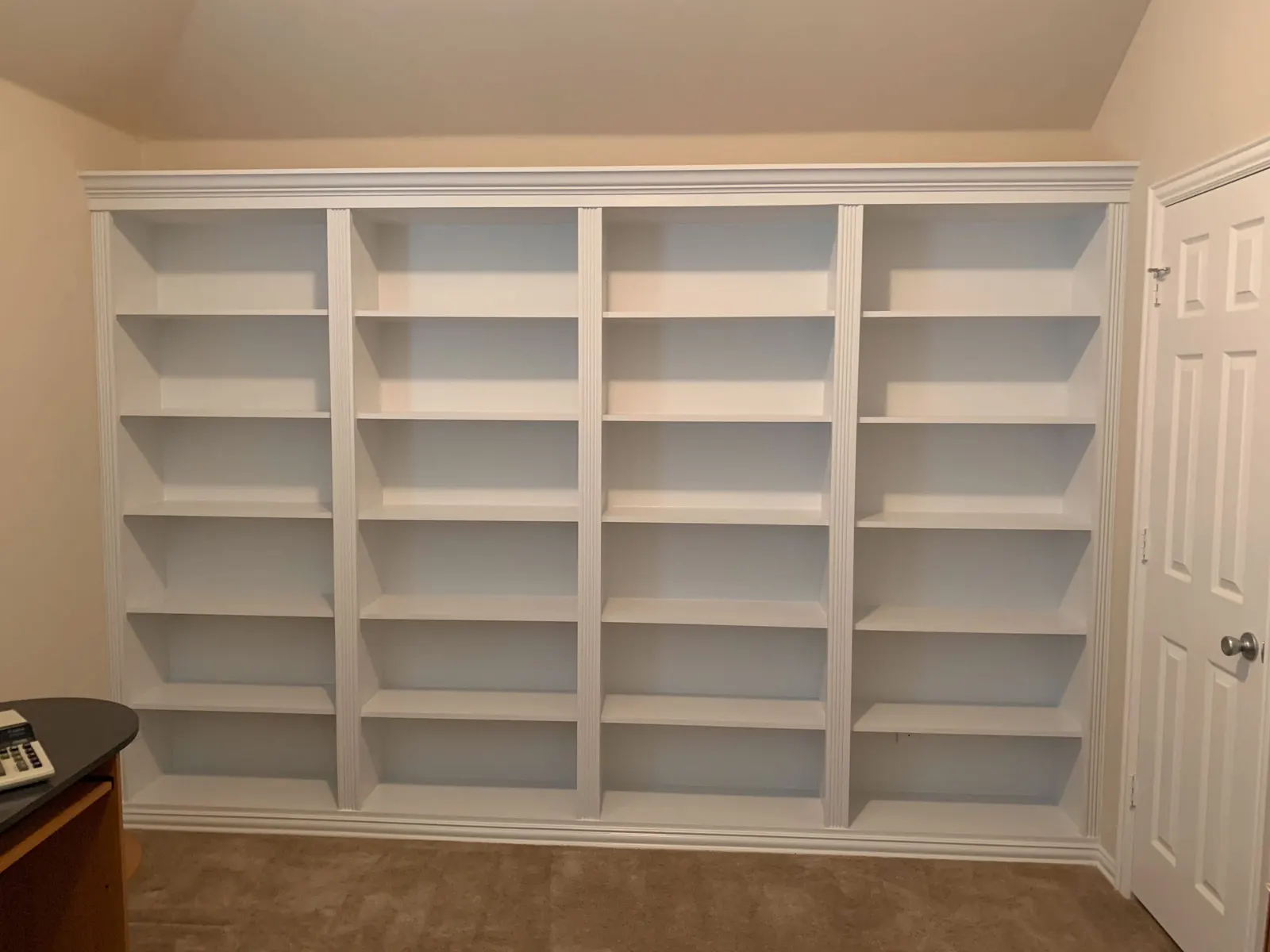
- Premade or modified stock units: $100 to $300 per linear foot. These use factory boxes trimmed to fit. They cost less but rarely fit oddly sized walls perfectly.
- True custom built-ins: $400 to $1,000+ per linear foot. Built for your exact wall, ceiling height, and trim style. This is where the seamless, “always been there” look comes from.
Material choice moves the price, too:
- MDF (paint-grade): $150–$400 per linear foot. Smooth, stable, and perfect for a painted finish. This is the most popular choice.
- Plywood with wood veneer: $150–$600 per linear foot. Strong and versatile.
- Solid hardwood: $500–$1,200 per linear foot. Oak, maple, walnut, or cherry for a rich, stained look that lasts generations.
Popular Built-In Projects and Their Price Ranges
Here is what homeowners around the Triangle typically spend on the most requested projects:
- Fireplace surround bookshelves: $1,000–$8,000. The classic. Shelves and cabinets flanking the fireplace turn a plain living room wall into the heart of the home.
- Entertainment center or media wall: $1,500–$9,000. Built around your TV size, with hidden storage for cords, consoles, and clutter.
- Home office built-ins: $1,000–$8,000. A desk, shelves, and cabinets in one clean wall. With so many people working from home, this is one of the fastest-growing requests.
- Window seat with storage: $2,000–$8,000. Seating, storage, and charm in one piece.
- Pantry built-ins: $1,000–$5,000. Pull-outs and organized shelving that make a kitchen work better every single day.
- Mudroom lockers and drop zones. Cubbies, hooks, benches, and cabinets that catch the daily flood of backpacks and shoes before it spreads through the house.
Built-Ins vs. Store-Bought Furniture: The Real Comparison
A big-box bookshelf costs a few hundred dollars. So why spend more on built-ins? Because they solve different problems.
Fit
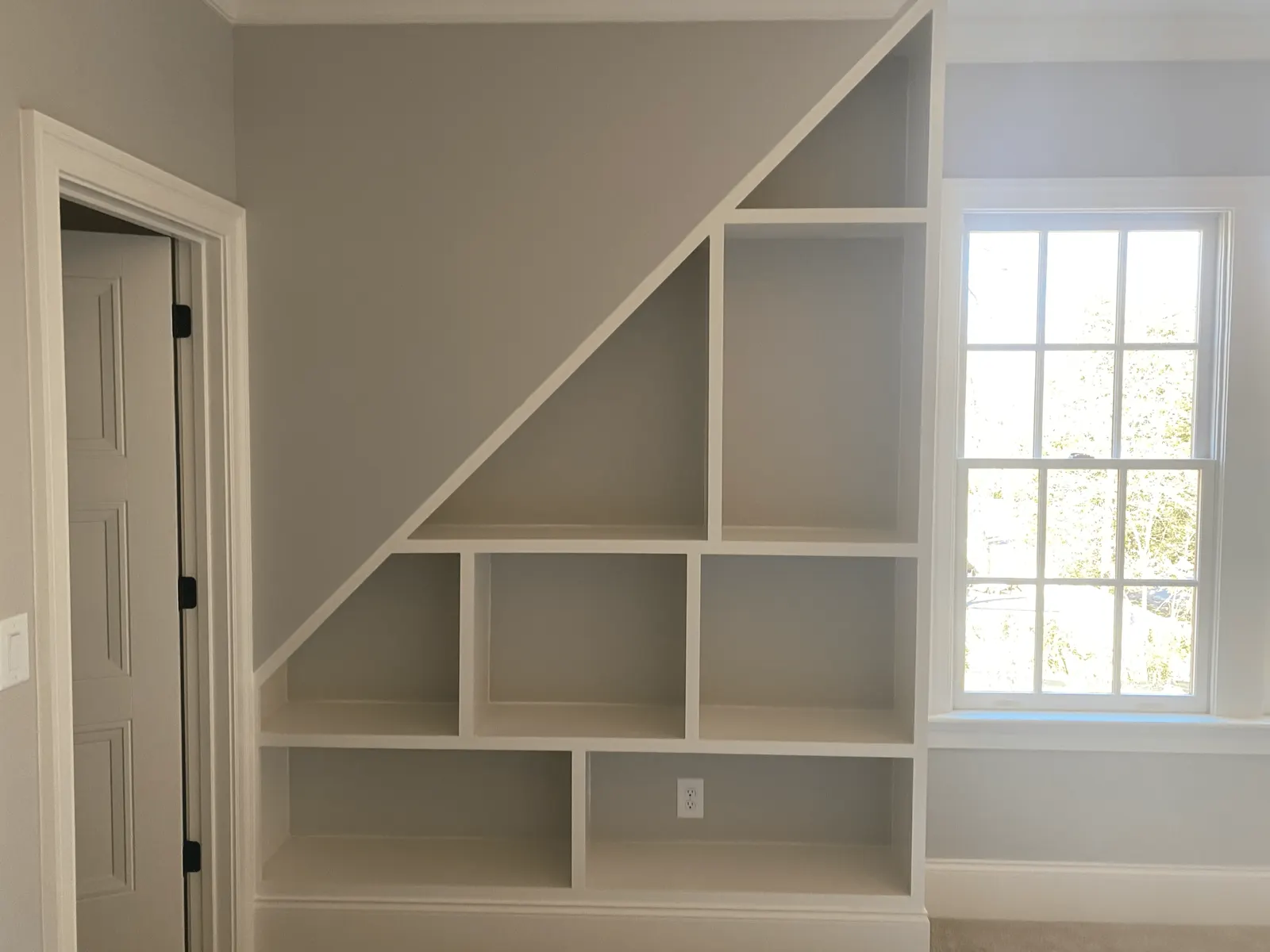
Furniture comes in standard sizes. Your wall is not standard. Built-ins use every inch, floor to ceiling and wall to wall. That corner where nothing fits? A custom piece turns it into storage.
Storage Power
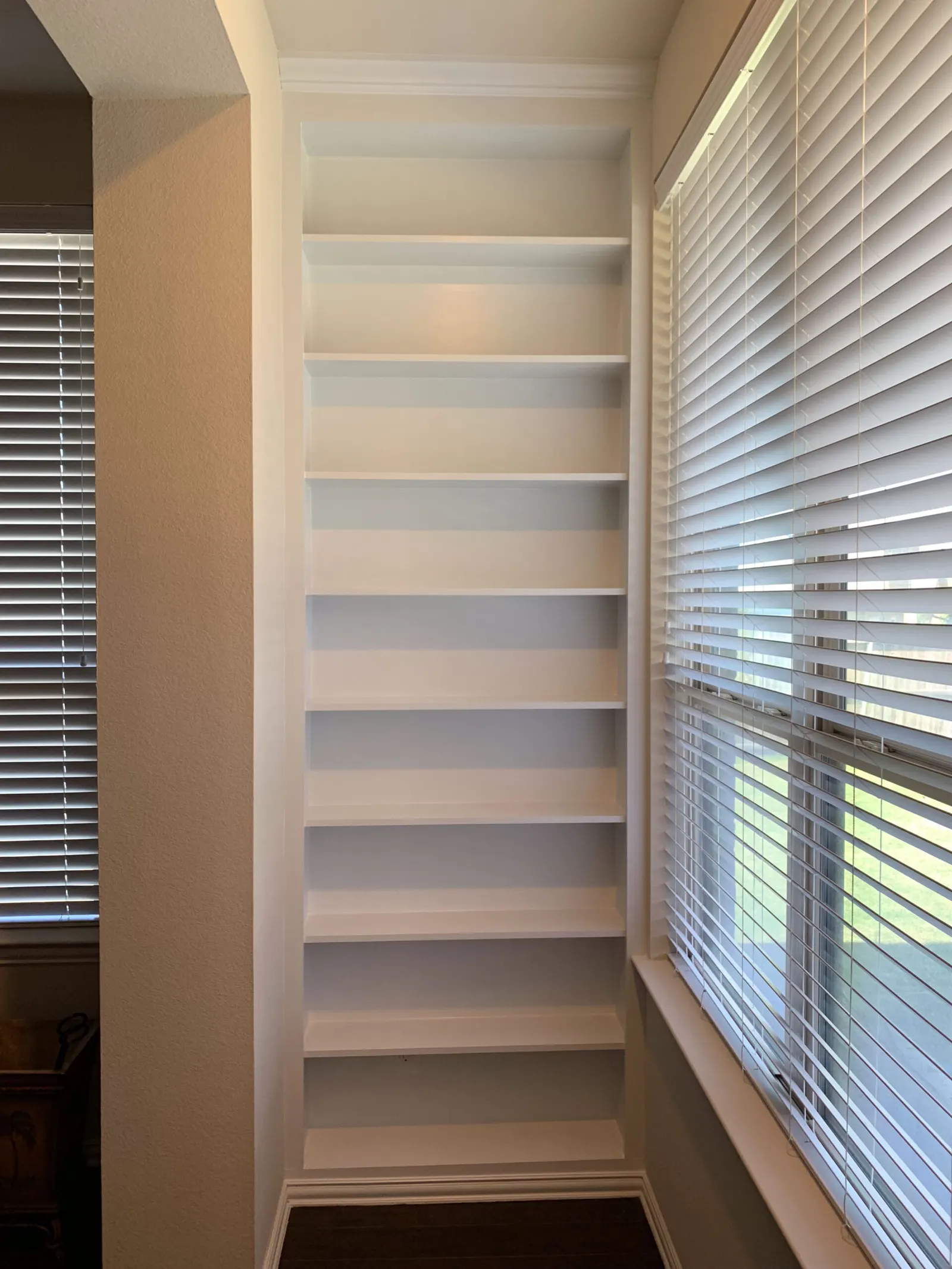
Floor-to-ceiling built-ins hold two to three times what a typical furniture piece holds in the same floor space. In a busy family home, that is a whole room’s worth of clutter with a place to go.
Durability
Built-ins are constructed in place, anchored to the wall studs, and finished like fine trim. There is no wobble, no sagging shelf, and no tipping hazard, which matters for families with young kids.
Style That Stays
Trends come and go, but built-ins are considered a timeless feature. Painted to match your trim, they look like part of the home’s architecture, not an add-on.
Do Built-Ins Add Home Value?
Built-ins are custom carpentry, so they do not show up in national resale reports the way kitchens do. But ask anyone who tours homes for a living, and you will hear the same thing: buyers remember built-ins.
Here is the local logic. The median home in Cary now sells for about $645,000. At that price, buyers expect homes to feel finished and custom. A living room with fireplace built-ins, an organized pantry, or a polished home office helps a home stand out from the identical floor plan down the street.
Storage also sells. Real estate surveys consistently rank storage space among the top features buyers want. Built-ins turn empty walls into storage without giving up any floor space.
And there is the value you enjoy now: less clutter, more calm, and rooms that finally work the way your family lives.
What Affects the Price of a Built-In Project?
- Size and height. Taller and wider means more material and more labor. Reaching a 10-foot ceiling adds complexity.
- Cabinet doors and drawers. Open shelving is the most affordable. Doors, drawers, and inset styles add cost but hide clutter.
- Details and trim. Crown molding, arched tops, beadboard backs, and furniture-style feet add craftsmanship hours.
- Lighting and power. Built-in lighting, outlets for a media wall, or charging drawers require electrical work.
- A sprayed, furniture-quality paint finish takes time to do right, and it is what separates custom work from a DIY look.
How a Custom Built-In Project Works
Knowing the process makes the price make sense. A quality built-in project follows a few clear steps:
- Design visit. A carpenter measures your wall, looks at your trim and ceiling height, and talks through how you will use the piece. TV size, book collections, kids’ toys, office gear — it all shapes the design.
- Detailed quote. You get a written price that covers materials, labor, and finish, so there are no surprises later.
- Build and install. Cabinet boxes and shelves are cut and assembled, then installed and anchored to the wall studs. Face frames, doors, and trim go on next, scribed to fit your walls exactly.
- Finish work. Caulk, fill, sand, prime, and paint. A sprayed finish gives that smooth, furniture-grade surface you cannot get from a roller.
Most single-wall projects wrap up within days once installation starts, not weeks. Your home stays livable the entire time.
Custom Built-In FAQs
How much do built-in bookshelves around a fireplace cost?
Most fireplace surround projects run $1,000 to $8,000, depending on size, doors versus open shelves, and finish. A full floor-to-ceiling design with base cabinets sits in the upper part of that range.
What material is best for painted built-ins?
Paint-grade MDF or a combination of MDF and plywood is the standard for painted built-ins. It is smooth, stable, and resists the small cracks that can show up in solid wood as seasons change.
How long does a built-in project take?
Most projects take a few days to two weeks of on-site work after design and material prep. Larger media walls or full office systems can take longer.
Can built-ins match my existing trim and cabinets?
Yes. That is the whole point of custom work. A skilled carpenter matches your trim profiles, paint colors, and door styles so the new piece looks original to the home.
Thinking About Built-Ins for Your Home?
The best built-ins start with a conversation about how you live and what you need to store. HomePro Remodeling designs and builds custom cabinets, bookshelves, entertainment centers, and trim work for homeowners across Cary, Raleigh, Apex, Fuquay-Varina, and Holly Springs. Reach out today for a free consultation and see what a skilled craftsman can do with your empty wall.